
Dome House Foundation Options: Deck, Concrete or Ground Screws?
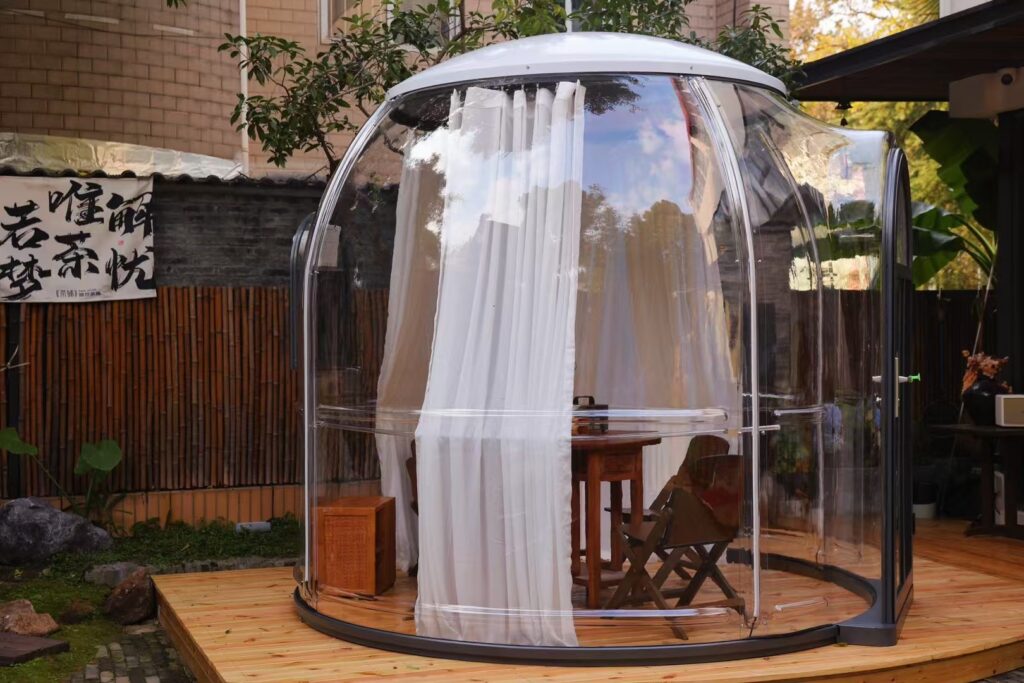
The foundation is the most underrated part of a dome project. Buyers compare frames and panels, then discover on site that the base decides how fast the installation goes, how well the dome seals, and how long it stays level.
There are three practical ways to support a dome house: a wooden deck, a concrete pad, or ground screws. Each has a clear best case. This guide compares them on cost, installation time, terrain suitability and maintenance — and explains what the factory supplies to make the choice easier.
Why the Foundation Matters More Than You Think
Dome kits are engineered to exact tolerances: panels clip into frames, frames bolt to the base ring, and everything lines up only when the base is level. A slope of a few centimeters at ground level becomes hours of shimming, gaps in the sealing tape, and doors that do not close properly.
The foundation also carries real loads. In snow country the roof collects weight that transfers straight down through the frame; in windy sites the whole structure works like a sail on its anchors. A proper base distributes both into the ground. And because the dome is a sealed envelope, the base is the line between ground moisture and your interior — that is why the installation guide treats the foundation as step one of five.
Option 1: Wooden Deck
A wooden deck is the most popular choice for glamping sites, and for good reason: it is fast to build, easy to level, and gives the interior a finished floor with natural warmth underfoot.
Best for: most campsites and resort plots on firm ground, especially where guests will notice the floor — bare feet, yoga mats, rugs. It also suits temporary or movable setups where the dome may be repositioned in a later season.
Build time: one to two days for a 4m deck with two people, including leveling and decking boards.
What to watch: keep the timber clear of direct ground contact where possible, use treated or naturally durable wood for anything close to soil, and verify level in both directions before the dome arrives. A deck built slightly oversize gives you a small entry terrace, which guests love and photographs well.
Option 2: Concrete Pad
A concrete pad is the most permanent option and the reference standard for commercial installations. Resorts that plan to operate for a decade or more, and sites in heavy snow-load regions, usually end up here.
Best for: commercial operations, permanent resorts, and climates with heavy snow or strong wind where anchor strength is the priority. It is also the natural choice when the dome sits on an existing slab or rooftop — the mountaintop resort featured in our case studies shows domes installed directly on a flat terrace.
Build time: formwork and pouring take a day, but concrete needs roughly a week to cure before anchor bolts can be drilled and loaded. Sequence the pad before the dome ships so it is ready on arrival.
What to watch: the highest upfront cost of the three options, and the least flexible — moving the dome later means abandoning the pad. Get the anchor positions from the factory before pouring, and slope the surface slightly away from the dome for drainage.
Option 3: Ground Screws
Ground screws (screw piles) are the fastest foundation and the modern answer for sites where concrete is impractical or a permanent footprint is undesirable.
Best for: sloped terrain, ecologically sensitive land, and sites where the dome may move between seasons. Screws are installed with a torque machine, leaving no concrete and no lasting footprint.
Build time: half a day for a 4m dome, often the same day the dome arrives.
What to watch: screws depend on soil conditions — they need load-bearing ground and fail in loose mud or rock. Have the soil assessed first. The frame then bolts to the screw heads through a leveling frame; the factory can supply the matching anchor hardware.
Deck, Concrete or Ground Screws — How to Choose
| Criteria | Wooden deck | Concrete pad | Ground screws |
|---|---|---|---|
| Upfront cost | Moderate | Highest | Lowest |
| Install time | 1–2 days | 1 day + ~1 week cure | Half a day |
| Terrain | Level firm ground | Any, after prep | Slopes; good soil only |
| Movable later | Yes | No | Yes |
| Lifespan / upkeep | Good; timber needs care | Best; minimal | Very good; minimal |
| Best for | Glamping sites, cozy interiors | Commercial, snow/wind regions | Eco sites, temporary setups |
If you are still deciding between dome sizes, the size selection guide helps you match the model to your site first — the foundation follows from the model and the ground.
What the Factory Provides
A good supplier does not hand you a kit and wave goodbye. Three things should come with the package:
1. Anchor hardware. Base ring brackets, anchor bolts and screw-head adapters matched to your chosen foundation type — specified, not improvised on site.
2. Foundation guidance. Level tolerances, anchor positions and recommended platform dimensions, so your contractor builds the base correctly the first time.
3. Installation support. Every STAR DOME project includes remote support on the first installation call, covering foundation handover through final sealing. The 5-step installation guide walks through the whole sequence.
If you are planning a site, tell the sales team your ground conditions and climate — they will confirm the anchor package and, for multi-dome projects, suggest a layout. Budget-wise, the foundation is one of the line items in the glamping dome break-even breakdown, so it belongs in your payback model from day one. Ask for a quote and the matching foundation spec here.
FAQ
What is the best foundation for a dome house?
It depends on your ground and climate. A wooden deck suits most glamping sites; a concrete pad is the most permanent and best for snow-load regions and commercial use; ground screws are fastest and leave no footprint but need load-bearing soil. The comparison table above matches each option to its best case.
Can a dome house be installed directly on grass or soil?
No. The frame and panels need a level, load-bearing base to keep the structure square, sealed and stable under wind and snow. A deck, concrete pad or ground screws are the three accepted ways to provide it.
How long does a dome foundation take to build?
Ground screws: half a day. A wooden deck: one to two days with two people. A concrete pad: a day to pour, plus roughly a week of curing before anchors can be loaded — so pour it before the dome ships.
Can a dome be installed on an existing concrete slab or rooftop?
Yes. A flat, level slab or terrace works as a ready-made foundation — the mountaintop resort case shows domes installed on a rooftop terrace. Confirm the slab can carry the load and drill anchors to the factory’s positions.
Do I need planning permission for a dome foundation?
Regulations vary by municipality. Some classify domes as temporary structures, others as permanent. Confirm with your local authority early — it is cheaper to check before ordering than to adapt after.
Ready to start your dome project?
Talk to our engineers or download the full product catalog first.
Related Posts
 13
Oct 2026
13
Oct 2026
PC Dome vs PVC and Canvas Glamping Tents: A Buyer’s Material Guide
PC dome vs PVC and canvas glamping tents: how the shell material decides lifespan, clarity, weather resistance and what you can build.
View More
29
Sep 2026
Dome House for Backyard Glamping: How to Plan Your First Unit
Dome house for backyard glamping, planned properly: right size, level base, power, heating and what one unit needs before delivery day.
View More