
How Long Does a PC Transparent Dome House Last?
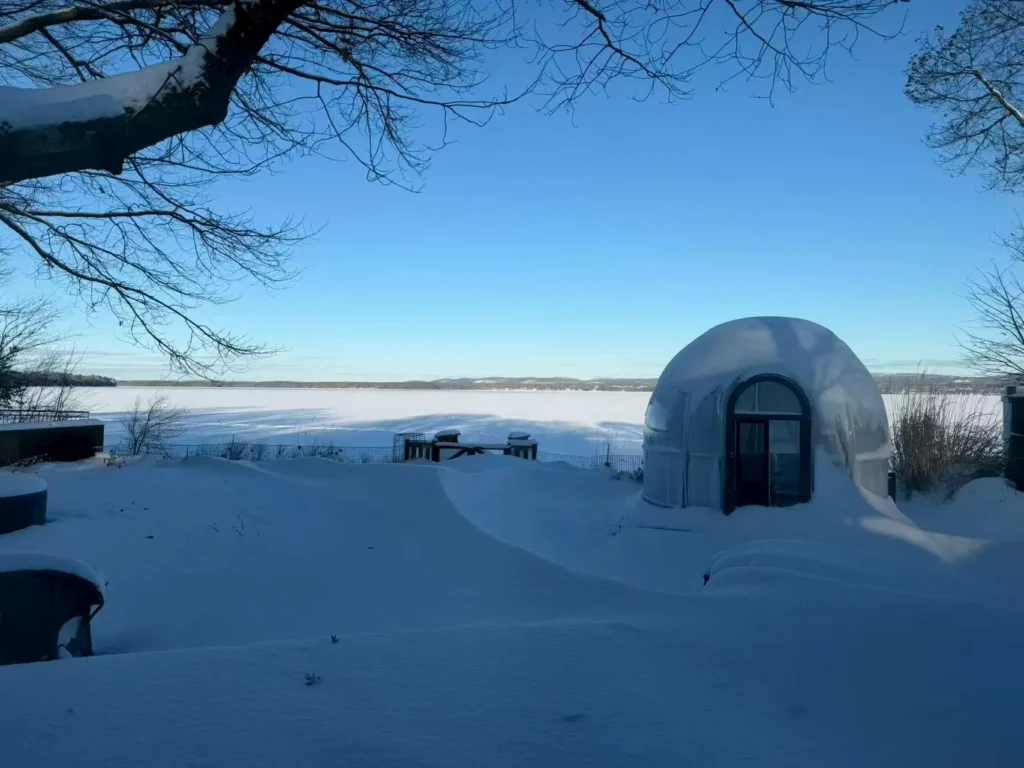
“How long does a PC dome house last?” is usually the first question a resort buyer asks — and it deserves a precise answer, not a marketing sentence. The honest way to answer it is to separate the structure into its three layers: the polycarbonate shell, the aluminum frame, and the UV coating that keeps the panels clear. Each has its own lifespan, and each is determined by decisions made at the factory, not at the site.
The Answer in Three Layers
Think of a transparent dome as three independent components with very different lives:
- The polycarbonate (PC) panels — the transparent shell. Engineered with a UV-resistant coating, PC panels are designed to stay clear and impact-resistant through a decade or more of outdoor service, and are covered by the factory against yellowing and cracking.
- The aluminum frame — the structural backbone. Extruded aluminum does not rust or rot, and the frame carries a structural warranty. In practice, the frame outlives every other part of the building envelope and can be re-skinned if a site ever wants a refresh.
- Seals, vents and fittings — the consumables. Gaskets, hinges and automatic vents are the parts a maintenance schedule actually touches, and they are simple to inspect and replace.
So the short version: the shell is built to serve beyond a decade, and the frame is effectively a lifetime asset. What determines whether a specific dome reaches that life is covered below.
The Polycarbonate Shell: Built for a Decade of Service
Polycarbonate won the material race for transparent glamping structures for a reason: it transmits 80–90% of daylight, blocks harmful UV, resists impact far better than glass, and weighs roughly one-sixth as much — which keeps freight and installation crews manageable. Compared with canvas, PC does not sag, mildew or need annual re-proofing; a simple wash-down keeps it presentable season after season.
The property buyers worry about most is yellowing. Polycarbonate yellows when UV radiation degrades the polymer — unless the panel carries a protective coating specified at the factory. That coating is a consumable whose lifespan depends on the grade chosen, which is exactly why every buyer should ask suppliers for the UV coating specification in writing. A dome quoted at a suspiciously low price usually saves money exactly here. Our PC vs glass comparison walks through how material choice changes the ten-year cost picture.
The Aluminum Frame: The Long-Life Asset
While guests see the transparent shell, the frame decides how long the building lasts. Aluminum does not rust like steel or rot like timber, so the structural risk profile of a dome is fundamentally different from a tent or a wooden cabin. Frames arrive pre-drilled and numbered for flat-pack shipping, assemble with a small crew, and carry the structural warranty from the factory.
Because the frame is the durable asset, replacement economics work in the operator’s favour: panels and skins can be swapped decades into service while the structure stays put. That is not a claim every structure type can make — it is one of the practical reasons operators compare domes against yurts and safari tents on a ten-year operating window, where a canvas structure needs its cover replaced every 3–5 years.
UV, Snow and Climate Reality
Longevity is not just material science — it is climate engineering. Three site factors shorten or extend a dome’s life more than anything else:
- UV intensity. High-altitude and equatorial sites get stronger UV. Specify the coating grade for your latitude, and keep panels clean — dust holds heat and accelerates surface ageing.
- Snow load. Our standard units are rated for 45–60 kg/m², with engineered reinforcement available up to 70 kg/m² for alpine sites. Ordering the right snow-load rating at specification time protects both the frame and the warranty — reinforcement cannot be added on site. Our winter-proofing guide covers the full cold-climate checklist.
- Condensation. Moisture trapped inside is the fastest route to a tired interior. Deliberate ventilation — an extraction path for moist air plus controlled fresh-air intake — is what keeps panels, curtains and furniture dry through humid seasons and cold nights.
What “Maintenance” Actually Means
Operators are often surprised by how little a PC dome demands. The routine is: wipe the panels with mild soap and water, check the seals, inspect the frame joints, and clear vents before each season. There is no gasket replacement schedule, no re-sealing campaign and no breakage budget line — the maintenance items that dominate canvas or glass structures simply do not exist here.
Two habits make the biggest difference over a decade. First, clean panels in the morning or evening rather than in direct sun, so water does not flash-dry into streaks. Second, walk the perimeter after storms — catching a shifted seal early is a five-minute job; leaving it costs a season of comfort.
The Ten-Year Operating View
Buyers who compare structures on purchase price alone miss where domes actually win. Over a ten-year operating window, a PC dome keeps earning with routine cleaning, while a canvas structure cycles through multiple cover replacements and a glass shell carries ongoing breakage risk and panel-replacement cost. Transparent domes also hold their photogenic edge — the clear shell that books premium nights still looks new when properly maintained. For the full business case on how quickly a dome repays its build cost, see our glamping dome break-even analysis.
Warranty and After-Sales Support
Lifespan claims are only as good as the warranty behind them. On our units, aluminum frames carry a structural warranty and PC panels are covered against yellowing and cracking. Spare parts remain available long after delivery, and our team responds to technical questions within 12 hours on working days. Before you compare quotes, ask each supplier three questions: what the UV coating specification is, what the structural warranty covers, and how long spare panels remain available — the answers separate factories that engineer for decades from those that ship boxes. Ask us these questions directly — we will put the answers in writing with your quotation.
FAQ
How long does a PC dome house last?
A PC transparent dome is built to serve beyond a decade of outdoor service. UV-coated polycarbonate panels resist yellowing and cracking, and the aluminum frame carries a structural warranty and typically outlives the shell.
Does polycarbonate turn yellow over time?
Unprotected polycarbonate can yellow under strong UV. Panels with a factory-applied UV-resistant coating are designed to stay clear well past a decade. Ask your supplier for the coating specification in writing when comparing quotes.
How long does the aluminum frame last?
Extruded aluminum does not rust or rot, and our frames carry a structural warranty. The frame is the long-life asset of a dome and can be re-skinned if the shell is ever refreshed.
What does the dome warranty cover?
Aluminum frames carry a structural warranty, and PC panels are covered against yellowing and cracking. Spare parts remain available long after delivery, with technical questions answered within 12 hours on working days.
Do PC dome panels need replacing often?
No. Routine maintenance is limited to washing panels, checking seals and inspecting frame joints. Unlike canvas covers, which typically need replacing every 3–5 years, PC panels are designed to serve for a decade or more with routine cleaning.
Ready to start your dome project?
Talk to our engineers or download the full product catalog first.
Related Posts
 13
Oct 2026
13
Oct 2026
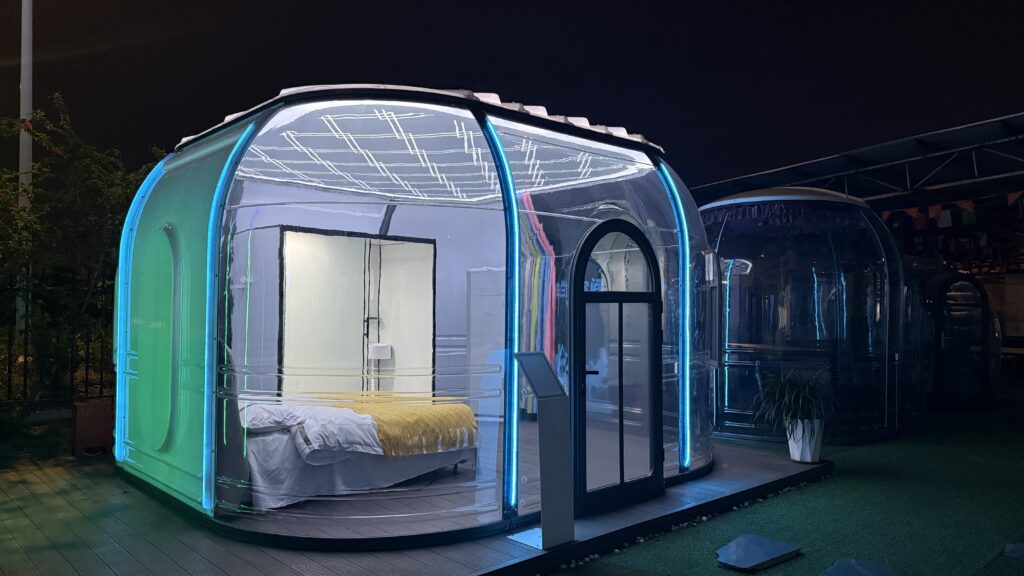
PC Dome vs PVC and Canvas Glamping Tents: A Buyer’s Material Guide
PC dome vs PVC and canvas glamping tents: how the shell material decides lifespan, clarity, weather resistance and what you can build.
View More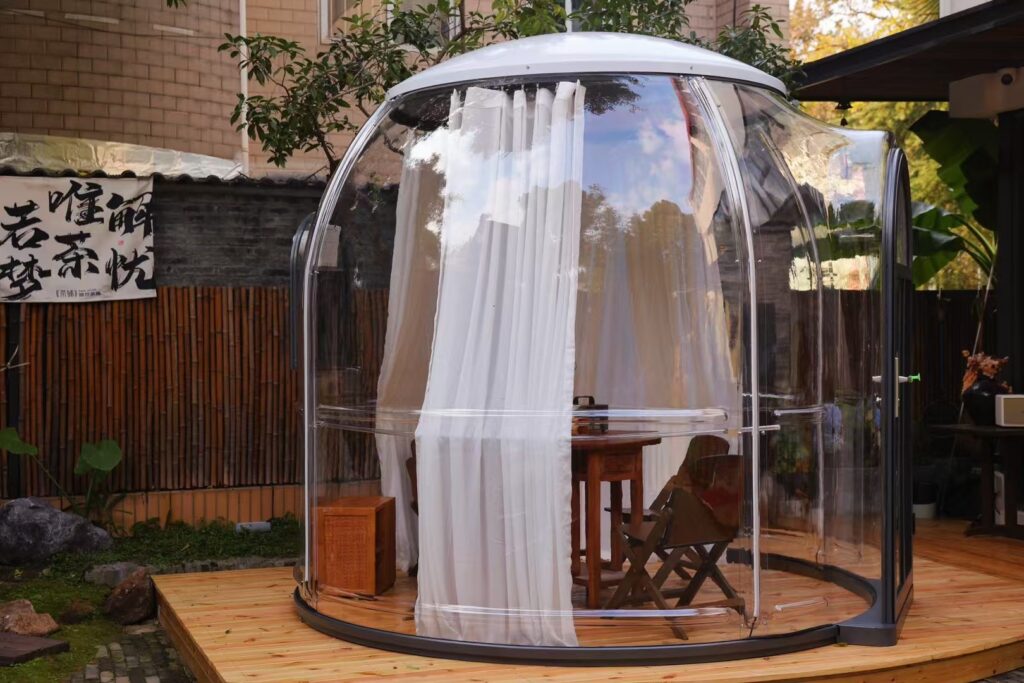 29
Sep 2026
29
Sep 2026
Dome House for Backyard Glamping: How to Plan Your First Unit
Dome house for backyard glamping, planned properly: right size, level base, power, heating and what one unit needs before delivery day.
View More