
Star Room Quality Checklist: What to Check on Doors, Frames and Panels

Two star rooms can look identical in photos and differ enormously in the workshop. The frame that looks the same on screen may be 20% thinner in aluminum; the door that photographs well may leak on its first rainy night; the wiring hidden inside may be the difference between safe and not.
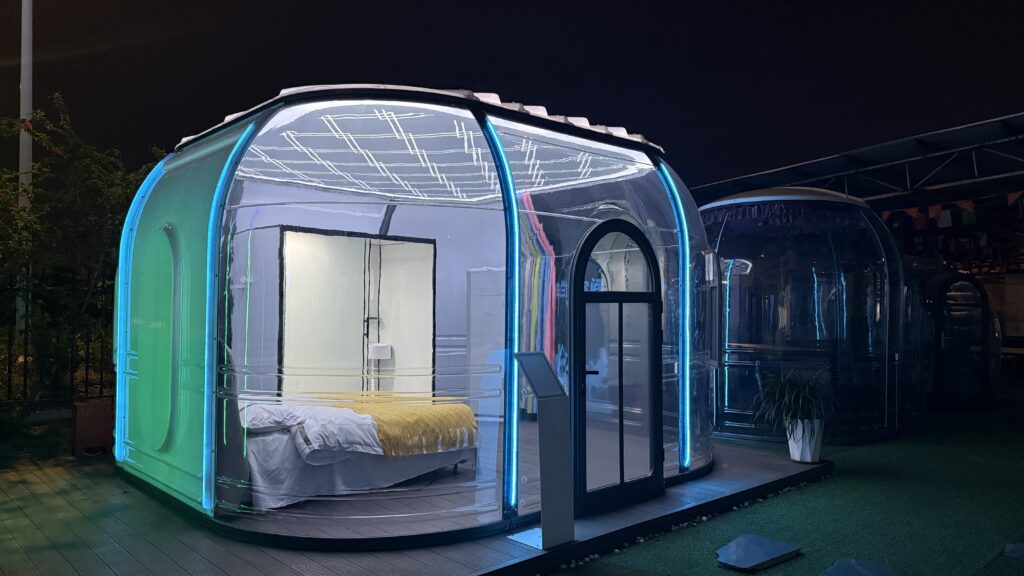
This checklist walks through the six areas that separate a well-built star room from a cheap one — the door, the aluminum profile, the windows, the PC panels, the accessories and the electrical box. Print it, take it to your supplier, and go through it point by point before you sign.
Start with the Door: Hinges, Rollers and Seals
The door is the part guests touch every day, and the part that fails first on cheap units. Check five things:
Hinges. Two hinges at the top of the door spread the weight and keep the door square over years of use. A single hinge lets the door sag and eventually misalign with the frame.
Rollers. Multiple rollers at the bottom of a sliding door make it glide smoothly. No rollers means a door that drags, sticks and wears its track unevenly.
Top seal. Look at the top of the security mesh screen: there should be no gaps, so wind and rain stay out. On cheaper doors, gaps at the top let rainwater blow straight in during storms.
Bottom seal. Close the door and check the bottom: it should sit tight against the threshold with no daylight showing. A door that does not close fully at the bottom is the classic cause of water leakage on rainy nights.
Screen door details. A screen door should come with a lock (one-touch locking) and a raised-sill design that drains water outward. Flat-bottom screen doors without locks are both a safety and a waterproofing problem.
Inside the frame, screws should be driven flush with dust caps — visible screws rust, catch fingers and look unfinished.
The Aluminum Profile: Weight Tells the Truth
Aluminum profiles look similar until you pick them up. Solid base aluminum weighs roughly 2.4 kg per profile section on a well-built star room; lightweight profiles come in noticeably lighter, and that difference shows up in stability, wind resistance and how long the structure stays square.
Also check the base threshold: it should be flush with the floor so guests do not trip. Uneven thresholds are common on budget frames and are a real liability on a commercial site.
Windows: Frames, Drainage and Locks
Windows are where buyers usually notice the difference first, because the sizes are visible at a glance.
Framed windows. A framed window (around 72 cm x 107 cm on our 3.5 m unit) is attractive, safe and structurally integrated. Frameless windows are typically much smaller — around 55 cm x 48.5 cm — which means less view and less ventilation for the guest.
Drainage outlets. Look at the bottom of the window frame: drainage outlets stop water backing up into the interior on rainy days. Frames without them risk backflow every time it rains.
Window screen locks. Screens should have a one-touch lock for security and safe operation. Unlocked screens are an easy entry point and a pinch hazard for children.
PC Panels: Clarity, Film and Thickness
The transparent panels are the star of the show, so their quality sets the guest experience.
Heat-insulating grey. A quality PC panel is a heat-insulating grey that shades, blocks glare and keeps the interior cool — while still looking crystal clear. Cheap transparent panels transmit harsh glare that makes guests squint and photos blow out.
Surface finish. Panels should be uniformly clear. Speckles, clouding or inconsistent tint are signs of low-grade resin.
Protective film. Quality panels ship with double-sided protective film, so the surface survives transport and installation scratch-free. Single-sided film leaves the exposed side vulnerable before the dome even opens.
Thickness. Thick panels are rigid enough to stack flat in shipping without flexing the frame. Thin panels deform when packed and stacked, and the damage shows up on site as wavy surfaces and poor seals. If you want to compare suppliers on panel quality, the PC vs glass comparison covers material behaviour in more depth.
Accessories: Wiring, Gaskets and Wind Resistance
Small components decide how the room behaves in daily operation and in bad weather:
Wiring. Wiring should be thicker and made with flame-retardant material. Too-thin wiring is a genuine safety hazard and the most common hidden downgrade on budget units.
Dust-proof gasket. The interior base aluminum should carry a dust-proof gasket that conceals wiring and keeps the interior clean. Without it, dust collects and wiring is exposed — harder to clean and a safety risk.
Side-panel fixings. Thermal-expansion screws fix the side panels neatly and stay waterproof as temperatures change. Exposed fixing screws look unfinished and let moisture in.
LED strip. A longer side LED strip lights the room evenly and looks deliberate at night; a short strip looks like an afterthought.
Top cover. The top cover should be thick enough to hold its shape. Thin covers sag and the soft film wobbles in wind — a small detail that cheapens the whole experience.
Fixing pins. Thick fixing-pin aluminum gives the structure strong wind resistance. Thin pins flex in strong gusts and shorten the life of the frame connections.
The Electrical Box: Safety You Cannot See
The electrical box is the one component nobody photographs, which is exactly why it deserves scrutiny. A built-in leakage circuit breaker (RCD) protects guests from electric shock and makes on-site wiring simple and compliant. A transparent wire duct keeps cabling tidy and inspectable. If the box has no RCD and no wire duct, wiring is messy, unsafe and almost certainly non-compliant for a commercial rental.
How to Use This Checklist When Ordering
Bring the checklist to the quotation stage, not the delivery stage. Ask the supplier for the specifications behind each item — profile weight per meter, panel thickness, RCD model — and compare offers line by line. The price breakdown guide explains which specifications legitimately move the price, so you can tell a quality difference from a sales trick.
At STAR DOME we build every unit — including the 3.5 m star room — to the standards listed above, and the full technical sheet is available on request. If you are comparing us with another factory, ask for their numbers on the same six points: door hardware, profile weight, window size, panel film, wiring spec and electrical protection. The comparison will usually decide itself.
FAQ
What is the most common quality problem with cheap star rooms?
Hidden downgrades: thinner aluminum profiles, undersized windows, thin wiring without flame-retardant material, and missing safety components like the RCD. None of these show in photos, which is why a specification-level checklist matters before ordering.
How can I tell if a star room door is well made?
Check for two top hinges, rollers under a sliding door, a tight bottom seal, a locked and raised-sill screen door, and no gaps at the top of the mesh. Flush screws with dust caps inside the frame are a good finishing signal.
Why does aluminum profile weight matter?
Heavier profiles (around 2.4 kg per section on our units) mean a stiffer frame that holds its geometry, resists wind and keeps seals tight. Lighter profiles flex, distort over time and eventually compromise the panel seals.
Is an RCD necessary in a star room?
Yes. A built-in leakage circuit breaker protects guests from electric shock and is expected for commercial rental use. If a supplier’s electrical box has no RCD, treat it as a red flag and ask why.
Ready to start your dome project?
Talk to our engineers or download the full product catalog first.
Related Posts
 13
Oct 2026
13
Oct 2026
PC Dome vs PVC and Canvas Glamping Tents: A Buyer’s Material Guide
PC dome vs PVC and canvas glamping tents: how the shell material decides lifespan, clarity, weather resistance and what you can build.
View More 29
Sep 2026
29
Sep 2026
Dome House for Backyard Glamping: How to Plan Your First Unit
Dome house for backyard glamping, planned properly: right size, level base, power, heating and what one unit needs before delivery day.
View More