
Tropical Dome House Ventilation: Keeping Transparent Domes Cool in Hot Climates
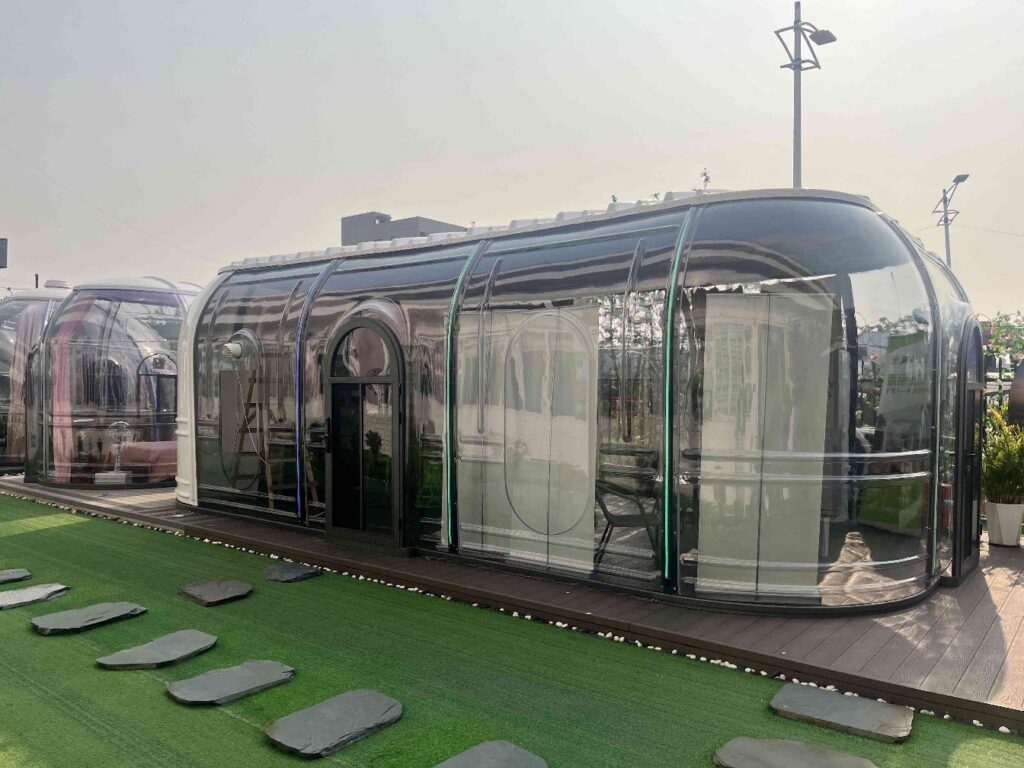
Buyers in Southeast Asia, the Middle East, Latin America and Australia often ask the same question: does a transparent dome become a greenhouse in a hot climate? It is a fair worry — a clear shell collects sunlight by design. The honest answer is that transparent domes already operate year-round in warm and tropical regions, and the difference between a comfortable unit and an oven is decided at specification time: ventilation, shading and cooling must be designed into the build, not added after delivery.
Why Transparent Domes Work Where Tents Don’t
Start with the structure itself. Polycarbonate panels block the UV that fades interiors and stresses guests, and they resist impact far better than glass — which matters in monsoon country, where a flying branch ends a canvas season. The hard shell shrugs off heavy rain and storm wind that would flatten or soak a tent, and it does not sag, mildew or need annual re-proofing. In hot, humid climates that maintenance difference alone is decisive: fabric structures fight mould all year; a PC dome is cleaned with a wash-down.
The same passive-solar physics that makes domes warm in winter can be managed in summer. Polycarbonate blocks much of the infrared heat gain, so the shell is not the solar collector a glasshouse is — and with the three controls below, the interior stays comfortable through the hot months.
The Cooling Challenge: Heat Gain and Humidity
A transparent dome manages two separate loads in a hot climate: heat and humidity. Heat comes from direct sun on the shell, especially in the afternoon. Humidity comes from the air itself in tropical sites and from guests — showers, cooking and breathing add moisture that a sealed shell traps. The engineering answer is the same airflow logic we use for winter condensation control: create an extraction path for warm, humid air and a controlled path for fresh air in. Design the air movement into the unit and the shell works with you in both seasons. The winter-proofing guide on this blog covers the cold-climate version of this system; hot climates need the same architecture in reverse.
Ventilation First: Design Airflow Into the Shell
Natural airflow is the cheapest cooling measure and the first thing to specify. Openable doors and windows create cross-ventilation when the unit is in use, and our automatic vent opener responds to interior temperature and humidity — opening when the shell warms up and closing when conditions return, without anyone touching it. For hot sites we recommend sizing the ventilation for the hottest hour of the day, not the average: a unit that handles midday heat handles the rest automatically.
Night ventilation is the tropical operator’s free air conditioner. In most warm climates the night air drops well below daytime peaks; opening vents and windows after sunset flushes the stored heat out of the shell so the unit starts the next day cool. This is a design habit, not a product option — plan openings that can be secured while left ajar overnight.
Shading: Stop the Heat Before It Enters
Every unit we ship can be fitted with interior thermal curtains, and in hot climates they earn their keep during the day. Curtains on the sun-facing side cut solar gain through the panels while the transparent view stays open on the shaded side — guests keep the panorama without sitting in direct sun.
Site placement does the rest. Orient the unit so the long transparent arc faces the view rather than the afternoon sun, and use existing trees, overhangs or shade structures where possible. A dome placed in morning-sun/midday-shade positions is dramatically easier to keep cool than one baking in full western exposure.
Cooling: Match the HVAC to the Volume
For humid tropical sites, ventilation and shading alone are rarely enough — guests expect air conditioning, and the room rate supports it. The sizing rule is the same one we give winter buyers: match the HVAC to the dome’s volume, not its floor area, because the shell’s height adds air that a flat building does not have. Heat pumps are the most common choice for year-round operation because they reverse — the same unit that cools in summer provides efficient heating in cooler months, extending the season at both ends.
Plan the mounting point and condensate drainage at layout stage. Retrofitting a cooling unit into a finished interior is far more expensive than designing the bracket, duct path and drain into the original specification.
Specifying for Your Climate
When you request a quotation, tell the supplier your site’s climate the way you would tell them its snow load: hottest month, humidity level and whether the unit runs on mains power or a generator. These three answers determine the ventilation package, curtain spec and HVAC sizing in your quote. For larger layouts — a spliced dining or lounge hall from the combination series — plan zoning: separate cooling for the public space and sleeping pods, so you are not conditioning empty volume.
Our engineering team includes ventilation and cooling advice in every quotation for warm-climate destinations. The right starting point is a brief enquiry with your site details — tell us the location and the hottest-month conditions, and we will put the cooling plan in writing alongside the price.
FAQ
Can transparent dome houses work in tropical climates?
Yes. Polycarbonate blocks UV and much of the infrared heat gain, and the hard shell handles monsoon rain and storm wind that damage fabric structures. With ventilation, shading and correctly sized cooling specified for the site, transparent domes operate year-round in warm regions.
How do you keep a transparent dome cool in hot weather?
Three controls: ventilation (openable sections plus an automatic vent opener that responds to temperature and humidity), shading (thermal curtains on the sun side and smart site placement), and cooling sized to the dome’s volume rather than its floor area.
What ventilation options do dome houses have?
Doors and windows open for cross-ventilation, and an optional automatic vent opener opens and closes with interior temperature and humidity. Night ventilation — leaving openings secured ajar after sunset — flushes stored heat out of the shell.
Do I need air conditioning for a dome in a hot climate?
In humid tropical sites, most operators fit a heat pump, which cools in summer and reverses to heat in cooler months. In drier hot climates, ventilation and shading alone may be sufficient for much of the year.
Can you supply domes with extra ventilation for hot-climate sites?
Yes. Automatic vent openers, additional openable sections and curtain packages are available, and our quotation process includes ventilation and cooling advice once you share your site’s climate details.
Ready to start your dome project?
Talk to our engineers or download the full product catalog first.
Related Posts
 13
Oct 2026
13
Oct 2026
PC Dome vs PVC and Canvas Glamping Tents: A Buyer’s Material Guide
PC dome vs PVC and canvas glamping tents: how the shell material decides lifespan, clarity, weather resistance and what you can build.
View More 29
Sep 2026
29
Sep 2026
Dome House for Backyard Glamping: How to Plan Your First Unit
Dome house for backyard glamping, planned properly: right size, level base, power, heating and what one unit needs before delivery day.
View More